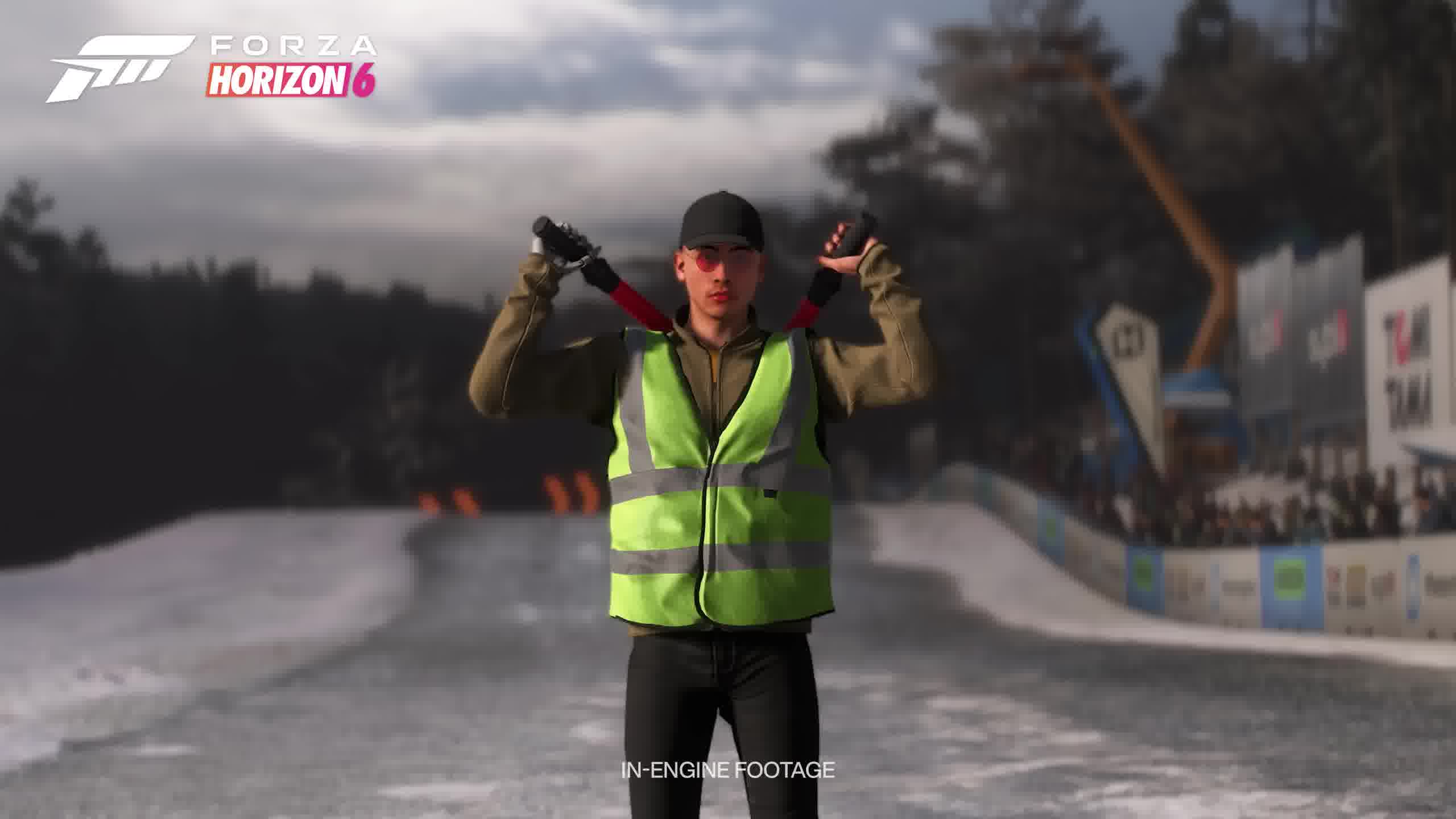
The early showcase footage of Forza Horizon 6 (FH6) is already shaping expectations around one core idea: car culture density over pure map size. The scene described in this gameplay segment isn’t a structured race—it’s a living rotary meetup centered around Mazda builds, Tokyo-side cruising, and chaotic downhill Touge driving toward Mount Haruna.
What emerges is less a traditional racing loop and more a social driving sandbox built around identity, tuning expression, and spontaneous group movement.
Mazda-Driven Car Culture in FH6
The highlight of this session is an all-Mazda rotary gathering—RX-3s, FCs, FDs, and FBs forming a rolling aesthetic showcase.
Rotary Meet Lineup Snapshot
| Model | Role in Meet | Build Style | Visual Theme |
| Mazda RX-3 | Lead nostalgia build | Light drift / classic grip | Retro, clean paint |
| Mazda RX-7 FC | Street cruise centerpiece | Balanced street-drift | Neon accents, tint-heavy |
| Mazda RX-7 FD | Performance anchor | High grip + power build | Widebody, aero-heavy |
| Mazda FB | Cult wildcard | Drift-focused | Minimal aero, raw style |
The defining feature isn’t horsepower—it’s visual storytelling. Window tint variation, caliper color accents, and mismatched aero kits create a “parking lot personality system” that FH6 leans into heavily.
Tokyo House Loop & Daily Reward Structure
The “Tokyo house” concept functions as a daily gameplay anchor point, where players spawn, collect rewards, and immediately join social convoys.
Daily Loop Mechanics (Observed)
| System | Function | Reward Type |
| House Garage Spawn | Central social hub | Fast convoy entry |
| Gas Station Meetups | Organic car grouping | Visual inspection + drift prep |
| Daily Wheel Spin Zone | Passive reward trigger | Random car parts / currency |
| Street Drift Queue | Multiplayer staging | Reputation points |
This structure suggests FH6 is prioritizing repeatable social loops over isolated race menus.
Mount Haruna Downhill Event System
The transition from Tokyo streets into Mount Haruna introduces the game’s most important gameplay pillar: elevation-based driving chaos.
Haruna Run Conditions
| Parameter | Effect |
| Wet Road Surface | Reduced traction, higher drift angle variance |
| Elevation Gain | Engine load increase, brake temperature scaling |
| Tight Hairpins | Drift chaining opportunities |
| Traffic AI Density | Unpredictable blocking / near misses |
This segment clearly pushes FH6 toward a more sim-style street driving tension model, especially with unpredictable AI traffic and convoy fragmentation.
Vehicle Tuning Breakdown (RX Platform Build Example)
One of the most detailed parts of the session is a full performance build from stock ~200 HP to ~450+ HP rotary configuration.
Performance Upgrade Path
| Category | Upgrade Choice | Result |
| Intake | Sport intake | + airflow efficiency |
| Fuel System | Sport fuel system | Stable midrange boost |
| Ignition | Sport ignition | Improved throttle response |
| Turbo | Race turbo | Major power spike |
| Cooling | Race intercooler | Heat control for sustained pulls |
| Weight | Weight reduction | ~2900 → ~2700 lbs range |
| Drivetrain | Race driveline | Reduced loss in power transfer |
Final Build Output
| Metric | Value |
| Power | ~453 HP |
| Weight | ~2700 lbs |
| Drivetrain | RWD (drift optimized) |
| Tire Setup | 245 square sport tires |
| Target Use | Touge drift + highway pulls |
The tuning philosophy here is clear: balanced drift capability without sacrificing highway stability.
Customization System: Identity Over Optimization
FH6’s customization layer is less about meta performance and more about visual identity expression.
Visual Mod System Overview
| System | Implementation |
| Body Kits | BOMEX / racing beat-inspired widebody kits |
| Wheels | Chrome + colored rim sets (pink highlights used) |
| Window Tint | Full saturation tint customization |
| Stickers | Layered vinyl grouping system |
| Livery Style | Partial decals instead of full wraps |
A notable design shift is the “vinyl grouping system“, allowing players to save sticker clusters and apply them across vehicles—creating a shared garage identity aesthetic.
Social Convoy Dynamics
The most interesting gameplay behavior isn’t racing—it’s convoy breakdown and regrouping.
Convoy Flow Model
| Phase | Description |
| Assembly | Gas station meet-up formation |
| Cruise Start | Single-file highway movement |
| Fragmentation | AI traffic + player divergence |
| Regroup Point | Rest stops / gas stations |
| Push Phase | Mountain climb sprint |
This creates a naturally emergent rhythm where no two cruises feel identical.
FH6 Credits Economy Layer
As progression expands across tuning, cosmetics, and vehicle acquisition, players are expected to engage with the economy system tied to FH6 Credits. These credits act as the primary unlock currency for performance parts, cosmetic upgrades, and garage expansion.
Some players may also explore external progression boosts such as Buy Forza Horizon 6 Credits options to accelerate garage building and reduce grind friction, especially when focusing on high-end builds or collection completion.
Closing Perspective: FH6 as a Culture Simulator
What this gameplay segment ultimately suggests is that Forza Horizon 6 is not just iterating on racing—it is simulating regional car culture ecosystems.
- Mazda rotary dominance reflects community identity building
- Haruna downhill runs reinforce skill-based tension
- Tokyo house loops create daily social structure
- Customization systems prioritize expression over optimization
FH6 is shaping up less like a traditional racing sequel and more like a persistent automotive social world layered on top of driving mechanics.
